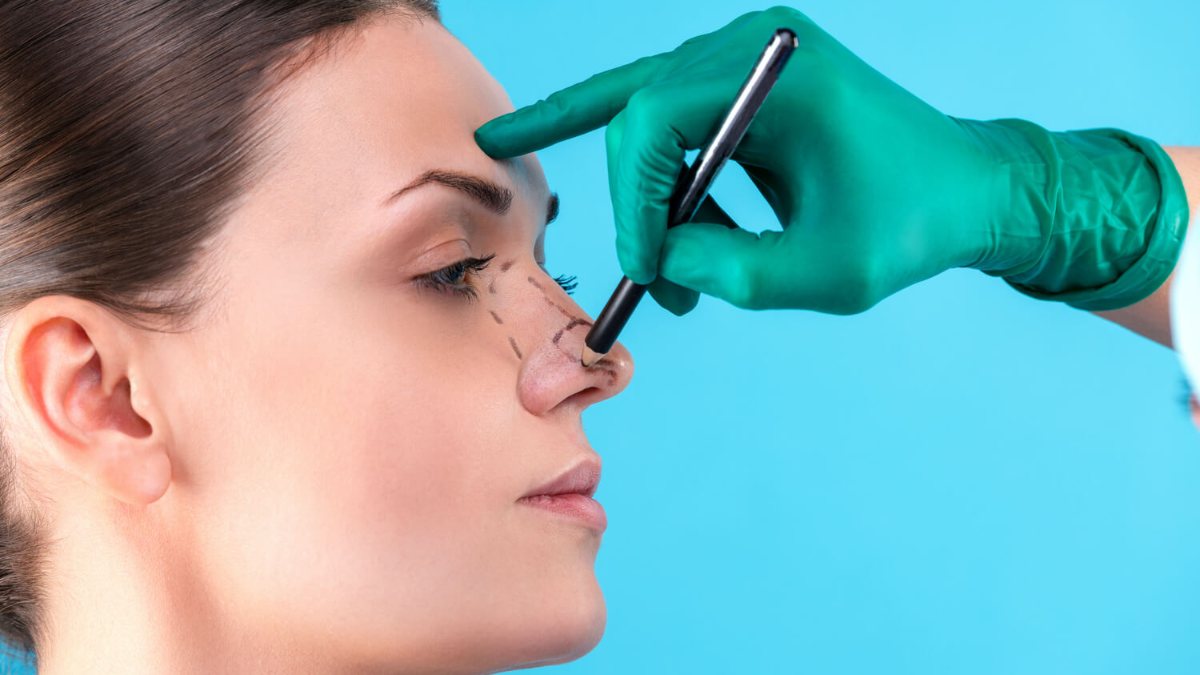
Rhinoplasty - Rhinoplasty
RHINOPLASTY - RHINOPLASTY SURGERY
The procedure performed in rhinoplasty (rhinoplasty) is to reshape the nose by changing the structure of the bones and bones. In order to create a more aesthetic nose shape, sometimes it is necessary to cut the bones and bones, and sometimes, on the contrary, to complete the missing places and change their shapes. It would be very correct to admit that this surgery is the most difficult and unknowable surgery of plastic surgery.
operation
Rhinoplasty surgery can be performed in two ways, open and closed technically. In the closed technique, all incisions are made inside the nose. The surgeon completes the operation by working from the inside. In the open technique, a 3-4mm incision is made at the tip of the nose and the tip of the nose is opened. The difference between the two techniques is related to the surgeon's approach to the operation and the patient's needs. Dec.
Which technique is better is always a topic of discussion among doctors who perform this surgery, and no Deci-sion has been made on this issue.
The biggest handicap of the open technique is that it leaves a mark on the tip of the nose. But this scar becomes almost indistinct after a well-performed operation and remains under the nose. Many patients forget this scar after surgery.
WHAT ARE THE COMPLICATIONS AND PROBLEMS THAT MAY OCCUR ?
The risk of bleeding in each operation may be more serious in rhinoplasty. Especially if non-aesthetic procedures will also be performed in the nose to relieve nasal congestion, which, if necessary, must necessarily be done, the probability of unwanted bleeding increases. It is an organ that houses medium-sized veins in the nose. But such bleeding usually does not reach dangerous dimensions and can be stopped with simple tampons.
After surgery, adhesions called sinecines may develop in your airways and these may make it more difficult for you to breathe than before surgery. The treatment of this is usually easy, but a second surgical intervention may be required.
Very rarely, a hole may form in the structure called the septum, which forms the middle of the nose. This usually does not cause a problem, but it can rarely cause a sound when breathing. It is difficult to treat and it may be necessary to have surgery again.
It can be said that infection almost does not happen in the nose. This organ, whose blood supply is very strong, is very resistant to inflammation. If the infection develops after this surgery, you can enter the medical literature.
The most common complication of surgery is aesthetic. After this surgery, you have a 10-15 percent risk of having surgery again, the world average is like this, and this is considered extremely normal. But most of them can be eliminated with simple interventions.
FREQUENTLY ASKED QUESTIONS:
Should a plastic surgeon or an otolaryngologist (ENT) perform this surgery?
This surgery can be performed by otolaryngologists and plastic surgeons. As long as he has a good command of both the internal and external anatomy of the nose, it does not matter which surgeon performs the operation. However, otolaryngologists also perform a large number of closed nasal bone surgeries (septoplasty) during their training just for healthy breathing. Therefore, it is a fact that they have mastered the internal anatomy of the nose a little more.
Can this surgery be performed with local anesthesia?
If something is to be done about the bones, which is largely necessary, local anesthesia will not be appropriate. This is an operation in which general anesthesia is a must.
Do I need to put a tampon? Will it hurt a lot when the tampons come out?
It is not necessary to put a tampon. Even after many surgeries, there is no need to put tampons. A tampon is only needed if a serious job has been done inside the nose. Modern tampons are no longer tampons as they used to be described. Silicone and tampons are used to allow you to breathe.
It is not an exaggeration to say that rhinoplasty is the most difficult plastic surgery. An operation that you will be very satisfied with if it is performed well, but it is also difficult to correct if it is performed poorly.
operation
Form of anesthesia: General.
Where should the surgery be performed?: In a hospital operating room.
Operation time: 2 to 2.5 hours.
Duration of hospitalization: You can be discharged on the same day.
Pain-distress after surgery: There may be a slight feeling for a few days. Usually, simple painkillers taken from the mouth are enough.
Swelling, bruising: Swellings are between 2 days, bruises are between 3-7 days. Dec. I minimize these complaints by applying ice at the time of surgery.
Dressing: If any, tampons are taken within 1 – 5 days. The plaster is removed on the seventh day.
Stitches: If an open rhinoplasty has been performed, the stitches are removed on the fifth day. The plaster is taken on the seventh day.
When can I return to work: 3-7 days.
Use of glasses: after 1-1.5 months.